NERAZIO
Buying Quality Backlinks: What Are They For?
This article explains how purchasing quality backlinks can enhance SEO positioning by improving a website's authority and reputation. It covers key strategies for acquiring valuable backlinks to boost online visibility.
Why quality backlinks matter
Quality backlinks remain one of the clearest signals search engines use to judge whether a page deserves attention. When a trusted publication links to your site, it transfers authority — and that authority compounds over time.
Authority is not only a ranking factor. It also shapes how buyers interpret your brand before they ever reach a pricing page. A mention in a credible outlet often does more persuasion work than another round of ads.
For competitive keywords, organic growth without external validation becomes increasingly expensive. Backlinks from relevant, high-trust sites help search engines understand that your content belongs in the conversation.
That is why growth teams treat link acquisition as a long-term asset rather than a one-off campaign. A strong profile keeps working months after the original story was published.
Not every link is equal
Generic packages and low-quality directories can dilute your profile, while editorial placements on real newspapers and digital media tend to earn both referral traffic and lasting SEO value.
Search engines have become better at detecting patterns that look artificial: identical anchors across unrelated sites, sudden spikes from obscure blogs, or links placed in content that no human would actually read.
A useful rule of thumb is to ask whether the placement would still be valuable if the link were removed. If the answer is yes — because of brand exposure, audience fit, or trust — you are usually looking at a healthier opportunity.
Context matters as much as domain metrics. A single editorial link from a newspaper your customers already know can outperform dozens of links from sites that never appear in a real buying journey.
What effective acquisition looks like
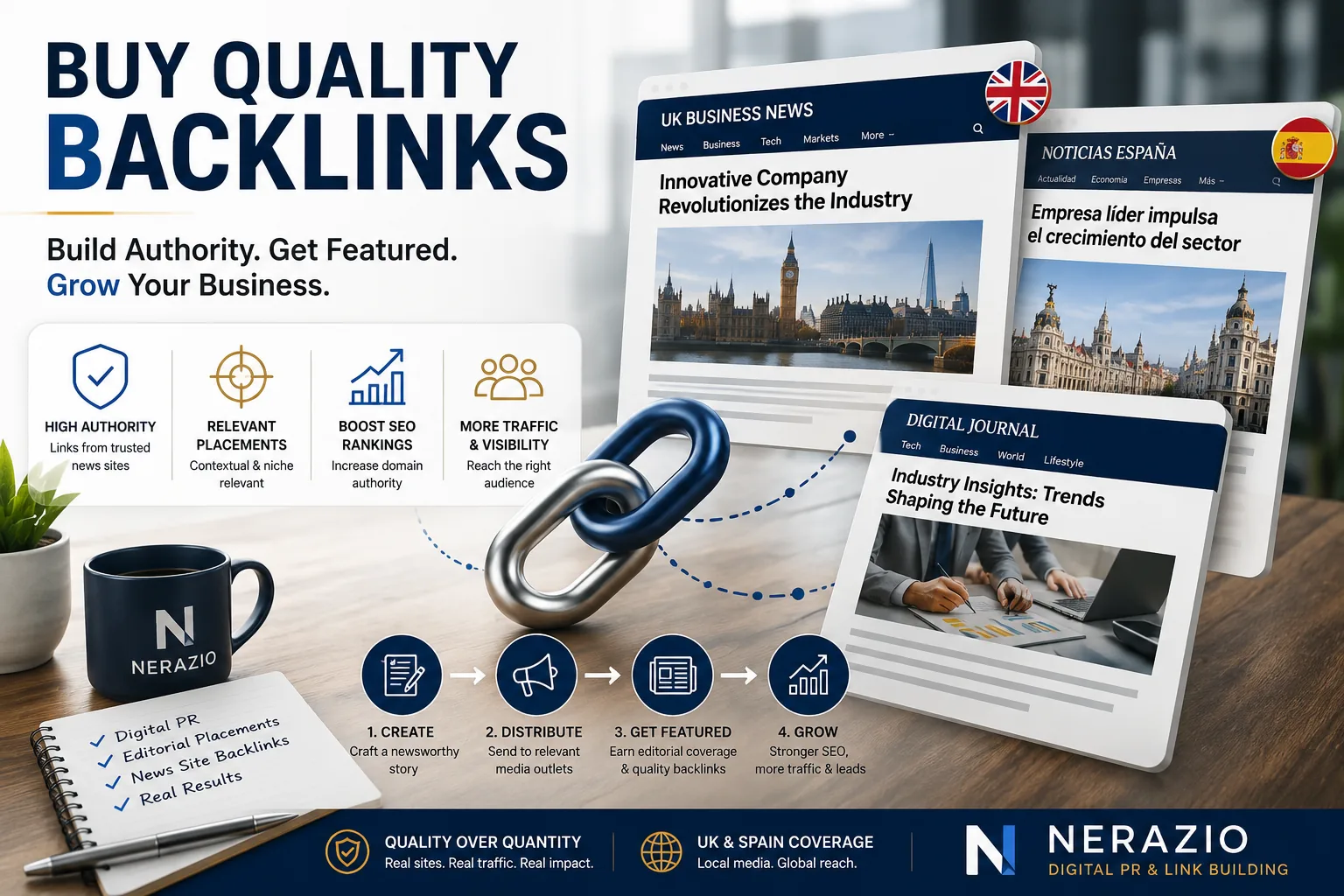
The most effective approach combines relevant topics, natural anchor context, and publications your buyers already trust. That is why brands increasingly prefer press-driven coverage over transactional link lists.
Start with a story worth publishing: a launch, a data insight, a market shift, a customer outcome, or an expert point of view. Weak stories force weak placements.
Then match the story to outlets that already cover your category. Relevance improves acceptance rates and makes the resulting link feel native to the page.
Finally, treat each placement as both a media asset and an SEO asset. Capture the URL, monitor referral traffic, and reuse the mention across your site, sales materials, and social channels.
Over a quarter, this process creates a portfolio of citations instead of a scattered collection of random links. That portfolio is easier to defend, easier to report on, and harder for competitors to copy overnight.
Visibility that builds reputation
If your goal is visibility that also builds reputation, prioritize backlinks earned through newsworthy stories. Authority, brand search, and conversion conversations usually improve together when the placement is credible.
Buyers often search your brand name after seeing coverage. That branded search lift is one of the clearest signs that media is doing commercial work, not just SEO work.
Sales teams can also put reputable mentions in front of prospects who are still comparing vendors. Third-party proof shortens the path from interest to trust.
The practical takeaway is simple: buy quality only when quality means editorial relevance, audience fit, and a story strong enough to stand on its own. That is what quality backlinks are for.